
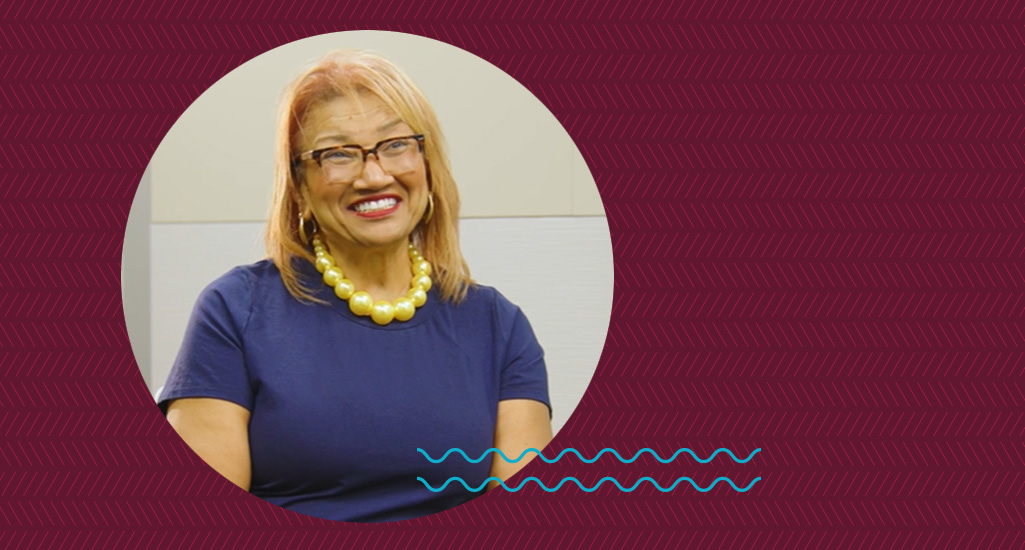
For years, Denise Hummer’s knees had a way of making themselves known. They greeted her every morning when she got out of bed, reminded her when she sat too long in her office chair and made simple things like climbing stairs or walking on uneven ground more challenging than they used to be. Like many people living with chronic knee pain, Denise gradually adapted. She shifted her weight without thinking about it, adjusted how she moved and quietly accepted limitations that seemed to grow a little more each year.
What finally got her attention wasn’t the pain itself, but everything the pain was preventing her from doing. As Denise looked ahead to retirement, she wasn’t thinking about doctor’s appointments or X-rays. She was thinking about her grandchildren.
“I wanted to be able to run around with my little grandchildren,” she said. “They run everywhere they go, and I wasn’t able to run and skip or hop.”
At some point, the constant compensating became harder to ignore. Then one day, a neighbor pointed out something Denise hadn’t fully recognized herself. “You’ve hurt your knee,” the neighbor said.
Denise immediately disagreed, but the comment stayed with her. After thinking about it, she realized her neighbor had noticed something she had become blind to. She had been favoring her knee for so long that she had developed a noticeable limp and altered gait. What felt normal to Denise had become obvious to everyone around her.
Combined with the pain she felt every morning and after long periods of sitting, it became clear that her knee wasn’t just bothering her anymore – it was influencing how she lived her life. She knew it was time to do something about it.
Years earlier, Denise had been told she had bone-on-bone arthritis and would likely need a knee replacement eventually. At the time, surgery didn’t feel necessary. The pain was manageable, and she wasn’t ready to take that step. So she waited, putting off the procedure for years. “I had put this replacement off for probably five years or more,” she said.
When she eventually met with Dr. Brent Damer at Central Indiana Orthopedics, she knew surgery would likely be part of the conversation. What she didn’t expect was how comfortable she would feel moving forward.
Looking back, Denise still laughs when she remembers meeting Dr. Damer for the first time.
“That is a big man,” she recalled. “I started at his shoes and looked all the way up.”
Denise joked that he was “large and in charge” and immediately gave the impression that he knew exactly what he was doing. But while his height certainly caught her attention, what stayed with her was how approachable he was.
“He was a gentle giant.”
Soft-spoken, patient and incredibly knowledgeable, Dr. Damer took the time to explain the anatomy of the knee, what had happened to her joint over the years and how a replacement would work. As a nurse, Denise appreciated the education, but even more than that, she appreciated the way he communicated.
“When it’s about you, it’s different,” she said.
Rather than rushing through explanations or assuming she already knew everything, Dr. Damer met her where she was, answered her questions and helped her feel confident in a decision she had postponed for years.
By the time she left the appointment, Denise felt certain she was in the right place. The surgery itself exceeded her expectations. Having spent much of her career in healthcare, Denise remembered a time when knee replacement patients spent nearly a week in the hospital recovering. Being told she would go home the same day seemed almost unbelievable. “I was really flabbergasted at how well it went,” she said.
But when Denise reflects on her experience today, the surgery isn’t what she talks about first. She talks about Natalie.
Before becoming a patient, Denise already knew Natalie McClintick, Central Indiana Orthopedics’ nurse practitioner and nurse navigator, through their time working together at Community Hospital. She knew Natalie professionally, but she didn’t fully understand the impact of the nurse navigator program until she experienced it firsthand.
After surgery, Denise was given a bracelet with Natalie’s name and phone number on it. Along with it came a simple message: If you need anything, call.

“I remember thinking, ‘Really? Anytime?'”
What sounded surprising at first quickly became one of the most comforting parts of her recovery. Not long after surgery, Denise became concerned about her dressing. Nothing appeared wrong, but she wanted reassurance. She called Natalie and explained that she was probably just being nervous. but Natalie didn’t see it that way.
“No, no, no. I’m coming,” Denise recalled her saying. “This is what I do. This is what I’m here for.”
A short time later, Natalie arrived at Denise’s home with supplies in hand. “She got down on her hands and knees on my living room floor and was taking care of me,” Denise said.
For someone who had spent part of her own nursing career providing home healthcare, that gesture meant a great deal. Denise understood how different healthcare feels when someone comes into your home. It removes the barriers of a clinic visit and creates a level of trust that can’t always be replicated in an office setting. More than anything, it provided reassurance.
“I was very reassured,” Denise said. “And I’m sure had I not been okay, she would have known exactly what the next steps were.”
Another time, Denise ran into a medication issue over the weekend. Instead of worrying about how she would get through the next few days, she called Natalie. “She fixed it all up,” Denise said.
The issue was resolved quickly, but for Denise, the bigger takeaway was knowing she had someone she could call when something unexpected happened. Rather than spending the weekend worrying, she had immediate access to someone who could help.
For Denise, that support became one of the defining parts of her recovery. Knowing there was someone she could call with a question, concern or unexpected issue provided something every patient wants after surgery but doesn’t always find: peace of mind.
Even with that support, recovery still required work, and physical therapy challenged her. Years of favoring her painful knee had weakened her leg, and rebuilding that strength took time. Perhaps the hardest part was learning to trust the knee again.
For years, it had been the source of pain and limitation. Now her therapists were telling her the exact opposite. “Your knee is fine,” they would tell her. “You can trust it.”
Gradually, she progressed and began to return to the things she loved. She moved from relying on a walker to walking independently, navigated stairs more confidently and stopped worrying so much about uneven ground. She also returned to gardening.
One of Denise’s favorite milestones came when she returned to the dance floor. Before surgery, she had attended a Valentine’s dance and hoped she could at least manage the electric slide, but the side-to-side movement proved too painful.
Today, that isn’t a concern. “I dance,” she said with a smile.
Looking back, Denise is grateful for the new knee, the mobility and the freedom from pain. But what stands out most is the feeling that she never had to navigate the experience alone. When she thinks about Natalie and the support she received throughout recovery, she sums it up with four simple words: “I’ve got you, friend.”
For Denise, the surgery gave her a new knee. The people surrounding her gave her confidence, reassurance and the support she needed to reclaim a life that had slowly been shrinking over the years.
Today, she’s back in her garden, keeping up with her grandchildren, tackling stairs without hesitation and stepping onto dance floors without fear. Most importantly, she’s no longer planning her life around knee pain. She’s simply living it and keeping up with the people she loves most.
Denise’s story is a reminder that recovery is about more than surgery. It’s about having the right support, reassurance and guidance when you need it most, with someone just a phone call away to help you every step of the journey.
Learn more about the peace of mind Denise experienced throughout her recovery and discover how CIO’s nurse navigator program provides personalized support before, during and after outpatient hip and knee replacement surgery: ciocenter.com/blog/find-personalized-24-7-care-for-outpatient-hip-knee-replacement-at-cio/